
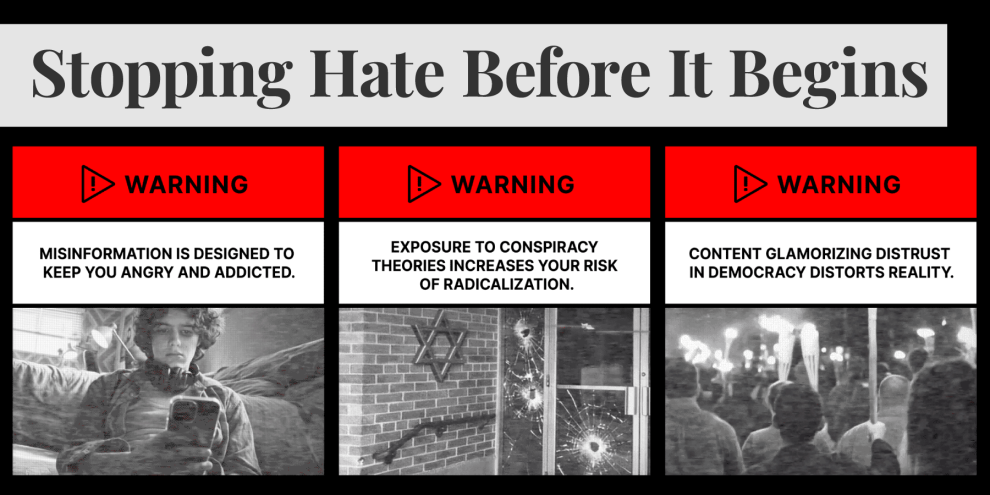
What if online hate came with a warning label?
That simple but powerful idea is at the heart of Hate Tags, an innovative initiative from the Toronto Holocaust Museum that is helping young people recognize and resist online hate before it takes root.
Inspired by the warning labels found on tobacco and alcohol products, the campaign places digital warnings ahead of hateful and misleading content, encouraging users to pause, think critically, and recognize that online hate is never harmless. Grounded in the lessons of the Holocaust, the campaign reminds us that propaganda and misinformation can have devastating real-world consequences—and that education remains one of our strongest tools for prevention.
The response has been remarkable. In just its first months, Hate Tags has generated 30,786,849 impressions. About 25% of those impressions appeared as warning labels placed directly before hateful and misleading content, interrupting users at the moment of exposure. 7.9M unique users were exposed to our warnings, encouraging young people to question what they see online and think more critically about the content they consume and share.
The campaign has also driven more than 50,000 visits to hatetags.com, where users can access practical tools, educational resources, and strategies for identifying misinformation, challenging online hate, and creating safer digital communities.
Made possible through donor support and the support of the Government of Canada this initiative extends the Toronto Holocaust Museum's mission beyond its walls and into the digital spaces where young people spend so much of their time. At a moment when antisemitism and online extremism are on the rise, Hate Tags is helping build a generation better equipped to challenge hate, think critically, and create safer online communities.
Click here to learn more about the Toronto Holocaust Museum.